
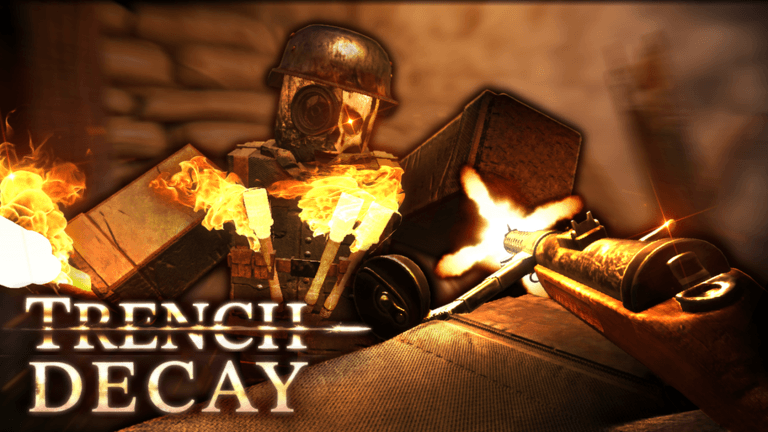
Trench Decay enemies include mutant types, New Order combatants, armored vehicles and named bosses in the saved community records. The Jaeger is associated with The Ossuary, Commissar Cerebus with The Keep, and the Tank with several combat modes. This guide organizes those records for identification; current-version details remain pending confirmation (待确认), without a complete roster or a tested damage chart.
01
Separate enemy names from combat roles
The official game description establishes squad PvE combat and changing campaigns, but it does not supply an enemy encyclopedia. The more detailed names below come from community pages archived on October 2, 2026. Their presence in that archive establishes a useful reference point, while their current appearance, behavior and availability still need confirmation in the game.
Start by identifying what is in front of you before choosing a counter. A name such as Tank can describe a vehicle enemy here, while players may also use the word informally for a teammate's defensive role. Likewise, an item bearing a boss's name is not itself another enemy, so equipment searches and encounter searches can lead to different answers.
02
Recognize the archived mutant catalogue
The saved enemy catalogue gives several mutants a short visual or role description. These labels help distinguish similar-looking threats without assuming that all enemies behave like a basic zombie. They do not establish health, damage, spawn timing or a complete list of attacks.
| Archived name | Identification supplied by the record |
|---|---|
| Pursuer | Knife-carrying mutant |
| Crawler | Grabbing mutant |
| Shambler / Corpses | Named entries in the mutant list |
| Bomber | Grenade-carrying mutant |
| Blinded | Armored, blind mutant |
| Screamer | Caller-type mutant |
| Coward | Seated mutant |
| Stone Angel | Mutant associated with candles |
| Grounder | Mutant described through shell shock |
Use the table as an identification aid when comparing the name or appearance shown during a run. A grenade-carrying enemy and an armored enemy present different questions, even before their exact mechanics are known. Observe the attack that is actually occurring and communicate that observation to your squad instead of relying on the generic callout “zombie.”
03
Keep Screamer claims within the evidence
The archive explicitly identifies the Screamer as a caller-type mutant. That supports recognizing it as a distinct enemy, rather than listing it as an independently verified boss. The saved catalogue does not explain a summon cooldown, a reinforcement limit or a guaranteed way to interrupt it.
If a caller is involved in a fight, our practical recommendation is to keep track of both it and the enemies already threatening the team. Watch what happens around its visible actions before attributing every new opponent to a specific summon mechanic. A useful squad callout describes what you saw, such as an enemy's location or animation, without turning an untested assumption into a rule.
04
Identify the Tank as an armored unit
The dedicated Tank archive describes a vehicle resembling a Mark IV tank with an added turret. It places the unit in raid and defense contexts, with some defense appearances treated as boss encounters. This is why the same name may occur in both general enemy lists and boss discussions.
That record discusses a main gun and a hull-mounted gun, but its firing figures are not verified for the current build. Treat the directions from which the vehicle can attack as something to observe, rather than relying on an old numerical timing window. Our editorial advice is to notice nearby infantry or mutants as well, because focusing entirely on the largest target can leave the squad exposed to a more immediate threat.
05
Find the Jaeger in the right context
The Jaeger archive also calls this boss the Iron Hound and associates the encounter with The Ossuary special operation. Its visual description emphasizes a large armored frame carrying heavy guns. These details distinguish it from the Tank and from the similarly imposing Heavy Emissary mentioned in the enemy index.
The saved encounter notes describe sustained gunfire, a charge and close-range attacks, including movement through destructible structures. They also recommend head targeting, but this guide has not tested the current damage relationship between head and body hits. Use that information as an archived lead to check during the encounter, rather than a promise that a particular position, weapon or evasive trick is safe.
The Jaeger record connects the aftermath of The Ossuary to the Iron Maiden mask. That is a relationship between an encounter and an item, not evidence that Iron Maiden is another boss. For the separate mask and challenge question, continue to the Iron Maiden guide.
06
Read Commissar Cerebus advice carefully
Commissar Cerebus is described in the archive as the officer commanding The Keep and as a boss encountered there. His appearance includes a distinctive multi-eyed mask, a uniform and a combination of blade and firearm equipment. The record uses Cerebus in its title and also contains the spelling Cerberus, so both spellings can appear in player searches.
The same source contains a material conflict about damage interactions. One passage describes explosive weapons as useful, while another presents a broad immunity claim that would exclude those attacks. Because those statements do not agree, this guide gives no absolute ranged or throwable immunity rule and no supposedly guaranteed weapon counter.
The consistent practical takeaway is to prepare for a named encounter rather than assume that ordinary enemy behavior applies. Read the current objective, watch the attacks and available recovery windows, and adapt when an approach is visibly ineffective. These are editorial precautions, not a tested phase script or a promise about how much damage a particular loadout will deal.
07
Avoid confusing bosses with equipment
Several searches that sound like enemy names actually concern equipment. Iron Maiden belongs to a mask and challenge context, while the archived records place the Demolisher in weapon discussions. Aegis, Lil' Timothy and Guts And Glory also belong in the weapons guide, rather than being invented as additional bosses.
Cerberus requires extra care because the archived mask catalogue includes The Cerebus Stitches alongside the boss-related spelling variants. A search for that name might concern appearance or acquisition instead of combat. Check the complete item or encounter name before following instructions, and use the cosmetics guide when the question is about a mask.
08
Prepare for the encounter you actually have
Before changing equipment, identify whether your main problem is an unfamiliar enemy, unclear controls or a loadout you cannot use comfortably. Review the beginner guide for setup questions and the classes guide for choosing a useful squad role. This keeps a difficult encounter from becoming an unsupported conclusion that one class or weapon is always best.
Campaign conditions can differ, so an old encounter description may not explain the objective currently on your screen. The map and Major Orders guide separates the shared campaign context from an individual run. Use the current mission instructions to decide what must be completed, rather than assuming every notable enemy must be fought in the same sequence.
09
What still needs current-version verification
This reference does not verify boss health totals, damage values, phase thresholds, reward chances or exact spawn schedules. It also does not treat every name linked in a community navigation menu as a confirmed current enemy. Those details need a dated official explanation or clear game evidence before they become step-by-step recommendations here.
The most useful next evidence would show the enemy name, encounter context and the specific behavior being described together. A screenshot can help identify a model, while a recording is better for testing an attack sequence or a claimed counter. Until those checks are available, use this page to identify threats and understand the limits of the archived advice.
Questions
What players ask
What kind of game is Trench Decay?
The official Roblox page describes it as a squad PvE roguelite shooter with changing campaigns, randomized weapon perks, and global Major Orders.
Where should a new player start?
Start with the beginner guide, read the current in-game class descriptions, and prepare a loadout that supports your squad before beginning a campaign.
Why can a campaign differ from this guide?
Trench Decay has changing campaigns and receives updates. Check the current objective, map and in-game descriptions; this guide explains the core systems rather than promising an exact route for every run.